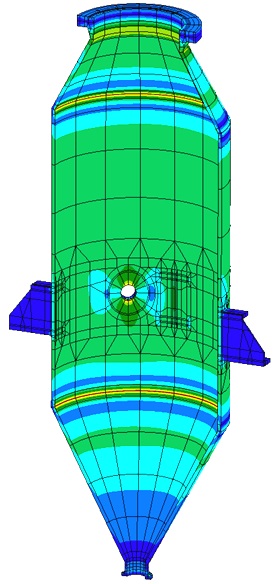
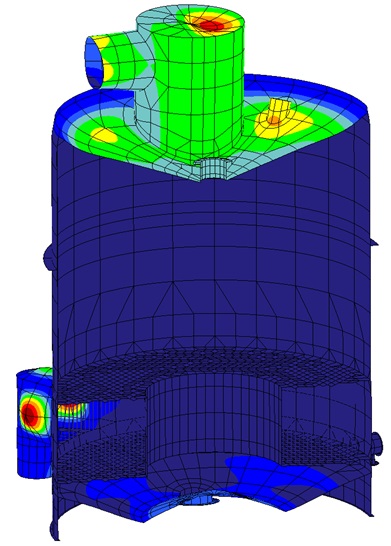
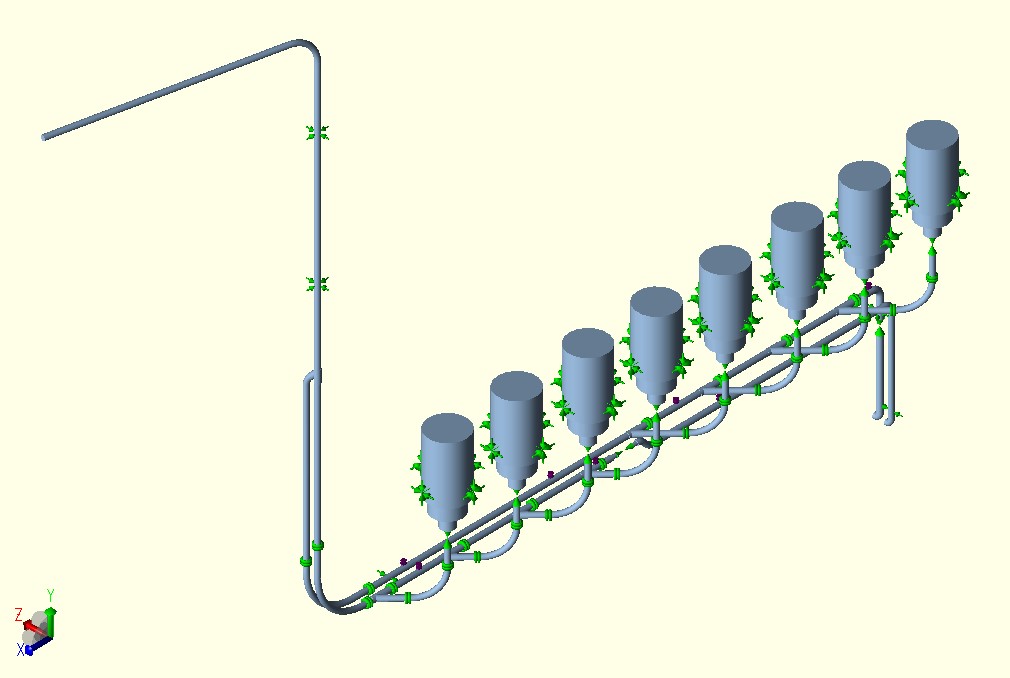
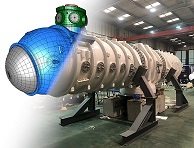
Mass producers in the food industry rely on the integrity of mechanical equipment to avoid costly downtime and resulting loss of revenue.

Pressurised equipment is at the heart of many of the processes which are used to produce the foodstuffs that we take for granted.
FCL have played our part in ensuring the safety and longevity of such equipment by providing engineering services to those involved in the production of a wide range of products including freeze-dried coffee, sugar, carbonated soft drinks and the finest Scotch whisky.
Case studies covering just three of the numerous projects undertaken by FCL for clients in the food industry can be viewed by clicking on the links below.
FAQs
Added March 2026.
Hygienic design in food processing is a preventative approach intended to ensure that equipment can be cleaned, sanitised, and operated without creating contamination risks. For pressure vessels, this typically involves ensuring that all surfaces are smooth and readily cleanable with no cracks, crevices or rough surfaces and that the design does not include any recesses or corners which are difficult to access for cleaning and inspection, together with the provision of good drainage.
The approach also extends to careful material selection, consideration of weld design and position, and the provision of appropriate access points with sealing arrangements that may be readily cleaned. The design process must also consider the ability of the design to accommodate regular cleaning, providing resistance to any cleaning agents that might be used and resistance to vacuum conditions in the event that steam is used for this purpose.
The pressure envelope of a vessel in food processing service must generally be designed in accordance with 'regular' pressure vessel codes and pressure equipment regulations such as ASME Section VIII Division 1 or Division 2, EN 13445, PD5500 and the PED. However, supplementary food?industry hygienic design and materials regulations, such as ASME BPE, must also be followed as appropriate.
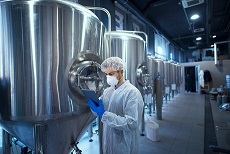
Bioprocessing equipment enables the synthesis of products via the use of biological processes. A common example of a biological process is fermentation, as used in brewing, but other applications include dairy processing and a variety of pharmaceutical and medical processes including vaccine and drug manufacture. Since even slight levels of contamination can ruin an entire production batch, hygienic design is of the utmost importance for bioprocessing equipment.
Engineering consultants can improve food production by providing expert input on the process equipment design, permitting optimisation of the material selection, geometric form and fabrication details in accordance with structural and hygienic design principles. Such measures can improve the efficiency and reliability of the equipment, enable a higher quality product and reduce waste due to contaminated batches.

Please use this form if you have any questions about our capabilities or would like to obtain a quotation.
Alternatively, you are welcome to call or contact us by e-mail.
+44 (0)1992 585450 enquiries@finglowconsultants.co.ukYour enquiry has been safely and securely received. Our office is open weekdays from 9am to 5pm - you can expect a response during the next 2-3 working hours.