FCL have established a successful track record in the provision of engineering consultancy services to the UK nuclear industry dating back to the late 1980s and early 1990s when the emphasis was on safely extending the life of the ageing Magnox power stations at sites such as Bradwell, Dungeness and Hinkley Point.

This pedigree in the nuclear industry was achieved by the successful execution of numerous structural integrity assessments and seismic hazard studies on new and existing equipment installed at Magnox & AGR power plants and the THORP fuel reprocessing facility.

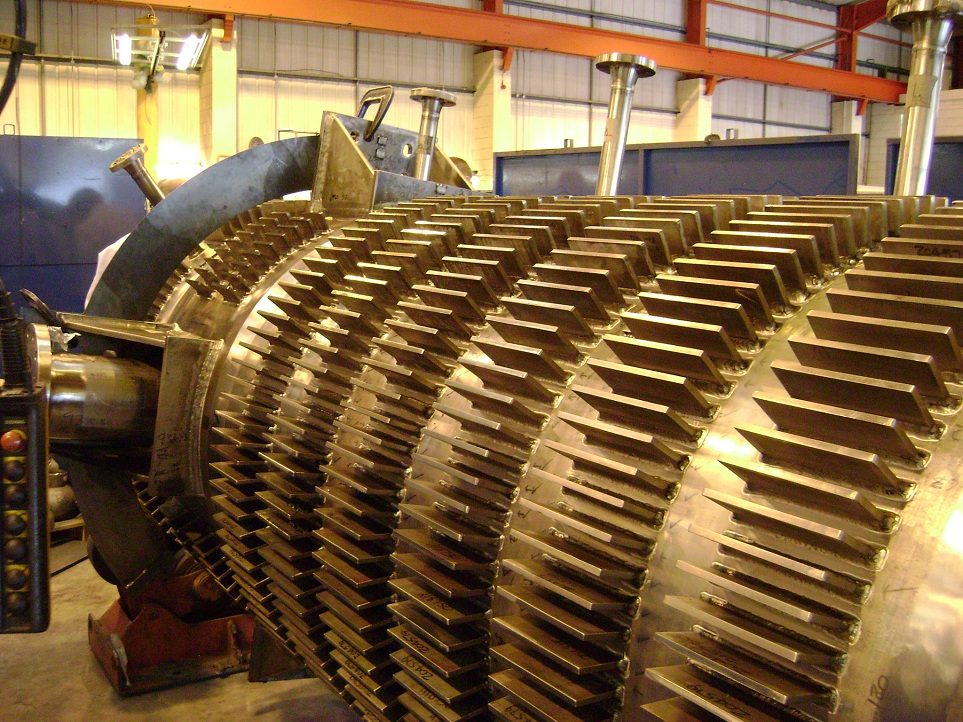
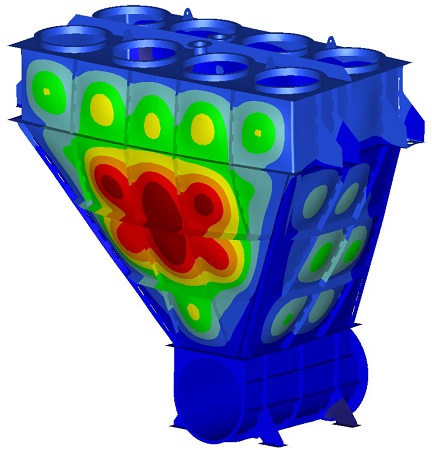
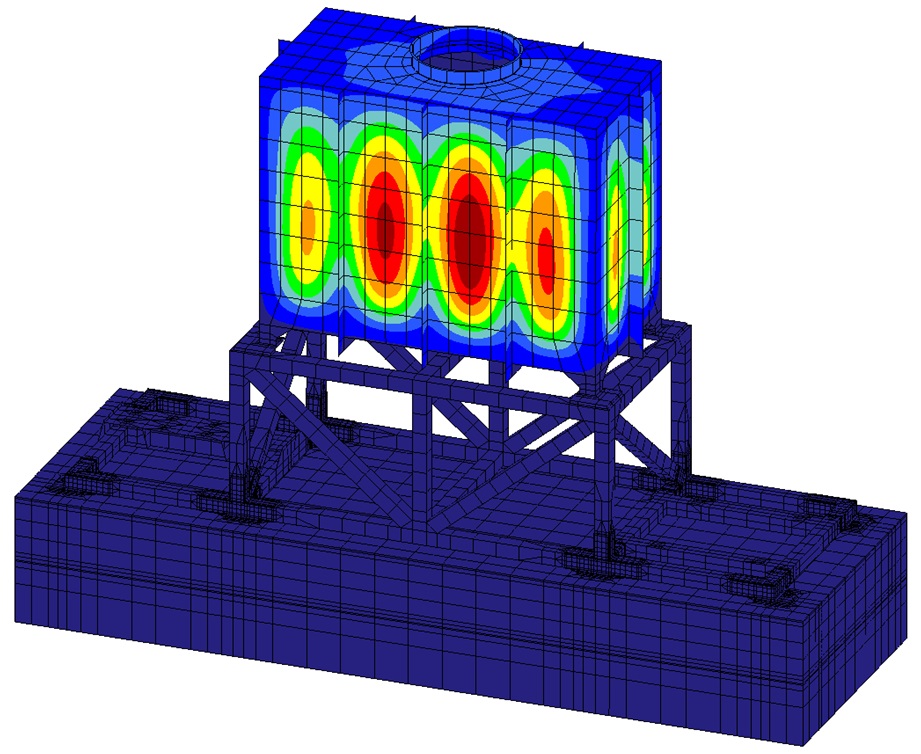
The wide range of project work that we have undertaken in recent years includes: seismic assessment of new “bottom line” steam boilers and ancillary equipment for Hinkley Point B and Hunterston B nuclear power stations; mechanical design and preparation of construction drawings for a replacement reaction section of a uranium hexafluoride (UF6) reactor vessel and a new HF kiln hopper installed at a UK nuclear fuel production facility; mechanical design and seismic qualification of vacuum insulated argon storage vessels for the Windscale Pile 1 Decommissioning Project; mechanical design and seismic qualification of cooling water strainers at the Lungmen & Ling-Ao Nuclear Power Stations; structural integrity assessment of pressurisers used in the production of AGR fuel pins; seismic qualification of nitrogen storage vessels at Dungeness B Nuclear Power Station; seismic assessment of RUHS frost protection condenser tube bundle at the Sizewell B Nuclear Power Station.
We believe that this range of experience represents a rare commodity which could potentially be put to good use as we look forward to the resurgence of the UK Nuclear power generation industry.
Case studies covering just three of the numerous projects undertaken by FCL in the nuclear industry can be viewed by clicking on the links below.
FAQs
Added March 2026.
Structural integrity requires that all safety critical components can operate without risk of failure. In the nuclear industry, the risks associated with failure (i.e. loss of radioactive material) are such that particular attention is paid to ensuring structural integrity via the application of additional margins, supplementary design requirements and rigorous inspection regimes during both fabrication and plant operation. Structural integrity starts with correct design and appropriate material selection, continues with high quality fabrication and then relies on a suitable system of condition monitoring during the life of the plant. At the design stage, it often requires the preparation of defect tolerance assessments to demonstrate that, even if flaws of a certain size were to be present in the structure, this would not represent a risk of sudden catastrophic failure.
Pressure vessels for nuclear service are frequently designed in accordance with ASME Section III, although FCL also has experience of the RCC-M codes which are used in France. Pressure vessels in ancillary service (e.g. for nuclear fuels processing, handling and storage) may be designed in accordance with 'regular' pressure vessel codes such as ASME Section VIII Division 1 or Division 2, EN 13445 or, for the UK market, PD5500. In all cases, the design must focus on ensuring high integrity, typically including detailed consideration of fatigue, the tolerance of the structure to flaws, and the influence of potential material degradation due to factors such as embrittlement and stress corrosion cracking.
Asset integrity management (AIM) is a multifaceted activity that starts with correct design and selection of appropriate materials for the intended service. Thereafter, it involves the monitoring of asset condition via regular inspection, enabling the tracking of key parameters such as remaining wall thickness, material toughness and absence of cracking over time. Effective AIM requires the definition of clear limits for each monitored parameter and a sound understanding of the likely damage mechanisms. When applied correctly, AIM provides an accurate indication of the remaining life of a piece of equipment and enables identification of limiting features, for which supplementary assessment could be performed with the objective of redefining the limits and permitting extended life.
Life extension for nuclear equipment is more nuanced than for other services due to the potential for radiation embrittlement, which may limit the safe plant life even when other parameters remain within design limits. However, when it can be assured that this is not a limiting factor, the life of equipment may be extended via the preparation of an appropriate assessment to demonstrate the presence of greater margins than were considered in the original design. This could be achieved by showing that increased levels of corrosion may be accommodated at an area of damage, or by demonstrating that a detected crack or flaw does not represent an imminent threat to the integrity of the structure. Assessment of damaged equipment to underwrite continued operation and/or life extension is most commonly carried out in accordance with API 579-1 / ASME FFS-1.

Please use this form if you have any questions about our capabilities or would like to obtain a quotation.
Alternatively, you are welcome to call or contact us by e-mail.
+44 (0)1992 585450 enquiries@finglowconsultants.co.ukYour enquiry has been safely and securely received. Our office is open weekdays from 9am to 5pm - you can expect a response during the next 2-3 working hours.